I’ve lived in Japan for a decade now, so I’m not sure if it was a hit overseas or not, but here in Japan the movie, “Kokuho”, was a massive hit. Making over 20 billion yen so far, it is now the highest grossing Japanese live-action film ever and is still shown at least once a day in many theaters now, in March, nine months after it came out.
It also sparked kabuki fever.
Getting Tickets
Dude and I went and saw our first kabuki last year after seeing the movie. It was the second Touken Ranbu kabuki performance at Minamiza in Kyoto. I love Touken Ranbu and Dude likes history, plus as a modern kabuki targeting non-kabuki fans, it seemed like a good first step into the world of kabuki.
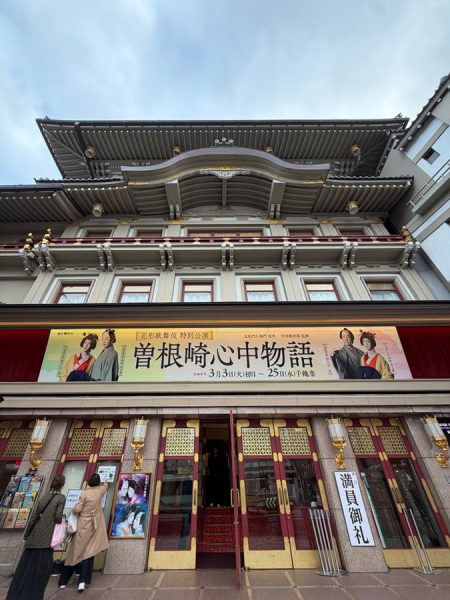
Our second one was “Sonezaki Shinju Monogatari”, or “The Love Suicide at Sonezaki” in English. This is the kabuki performance that was a major source of conflict and also closure between the to main characters in “Kokuho”.
But we almost didn’t see it. When we first tried to get tickets, they were completely sold out on all the days we could go. Disappointed, we gave up.
Luckily, while scrolling on Twitter/X I saw an advertisement for obstructed view seats on the left and right side on the third floor that Lawson Ticket had available. After a quick confirmation that Dude, too, wanted to see the performance even with a poor view, I snapped up a couple of seats.
My Outfit
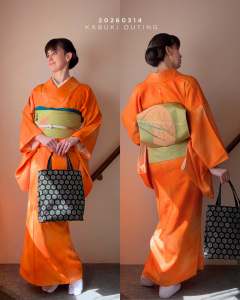
Dude needed to go to the ENT for more allergy meds because, well, it’s spring in Japan. While he was out, I got dressed. As usual, hair and makeup took the longest because I’m not good at either, but I was fully dressed in ready in less than two hours.
People often dress more formally on the first and second floors, but we had cheap third floor seats, so I went with a single-colored iromuji and a nice Nagoya obi. There is no dress code at the kabuki theater, so you can actually wear whatever you want.
The kimono is a hand-me-down from my MIL. I got the obi used from Yume Ichimon in Gifu City, and the obijime and obiage were items I got from friends. My bag is from Nosyudo, an iaido specialty shop near where I live.
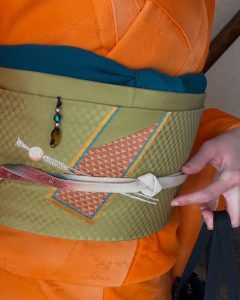
As for why I selected that I did, it’s mostly based on the two main characters. One of the kimono Ohatsu wears is orange. Tokube wears a green kimono, so I selected a green obi. Fans and hair accessories also fit well; Ohatsu is a courtesan. Thus, my “The Love Suicide at Sonezaki” outfit was complete.
I did my hair in one of the two styles I can do consistently and added the cute butterfly comb Dude got me from Taiwan.
Arriving in Kyoto
This was a day trip for Dude and I. We drove over to Kyoto after having lunch at home.
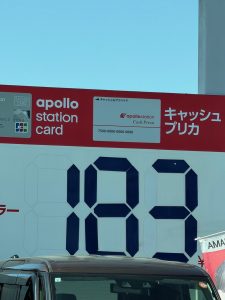
By the way, gas prices jumped up in only 24 hours after the war between Iran and Israel started. Some folks on Twitter commented that this is cheap compared to the US, but US salaries are waaaaay higher than Japanese salaries, plus y’all are viewing the price through the exchange rate. The Japanese government has been artificially lowering gas prices for about a year now and goodness know how long they can keep it up.
We parked near the Kyoto National Museum, where inexpensive parking is plentiful. Our first stop was to Toyokuni Jinja to see the exhibit that included the sword, Honebami.
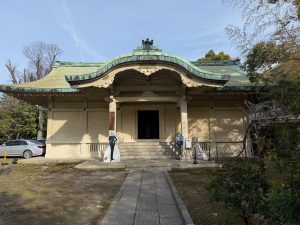
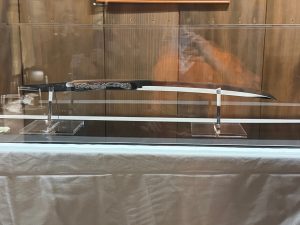
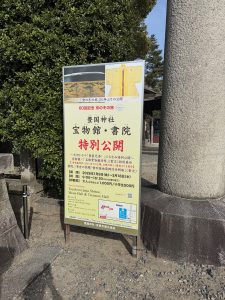
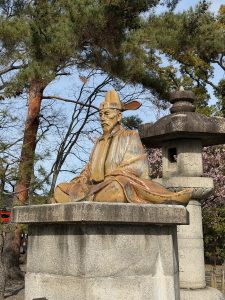
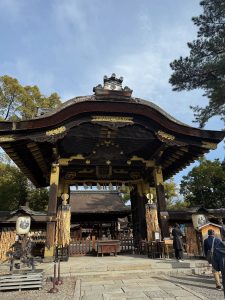
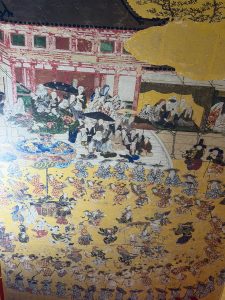
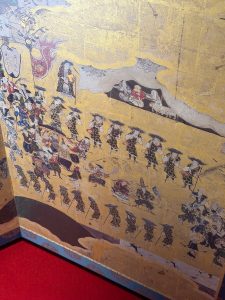
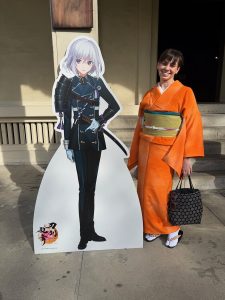
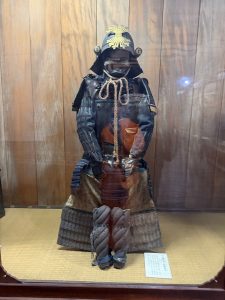
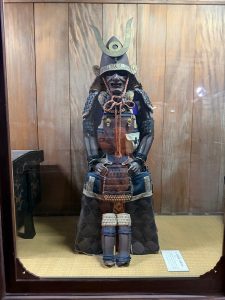
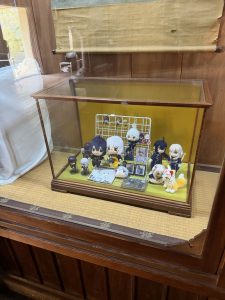
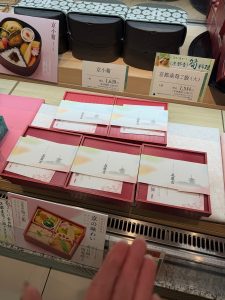
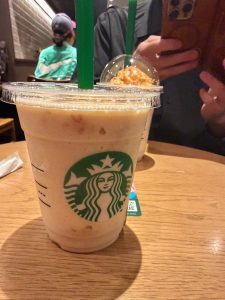
After that, we visited a relative’s grave, then headed to the Shijo/Kawaramachi area. We stopped by Takashimaya for some obento to enjoy between curtains and relaxed for a bit in Starbucks
The Love Suicide at Sonezaki
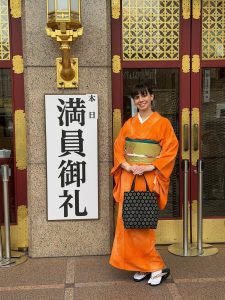
And then it was time to head in! Our seats were up on the third floor.
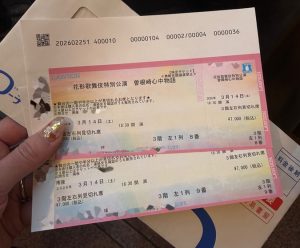
The show started at 6:30PM, so we were pretty hungry when we sat down. Once we were done taking photos and settling in, we opened up our bento
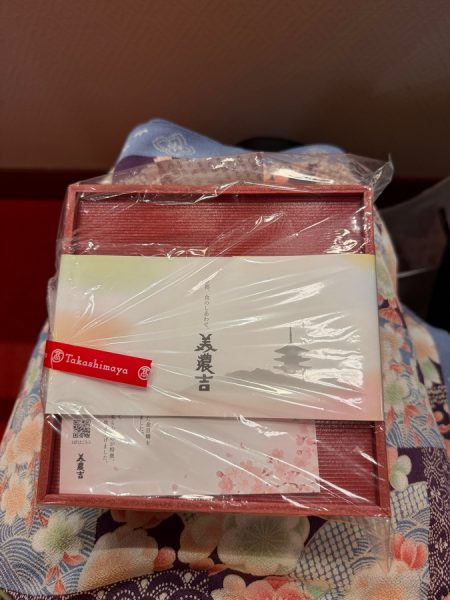
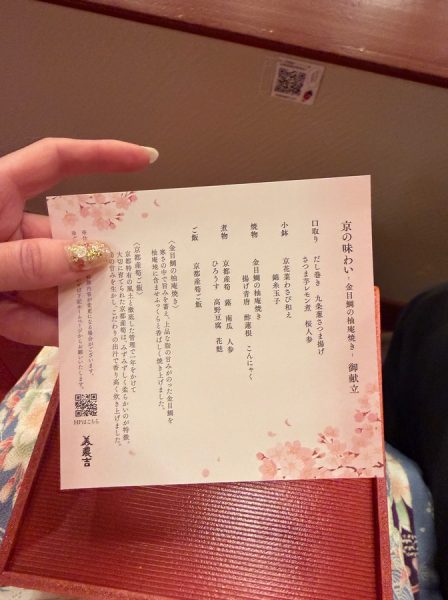
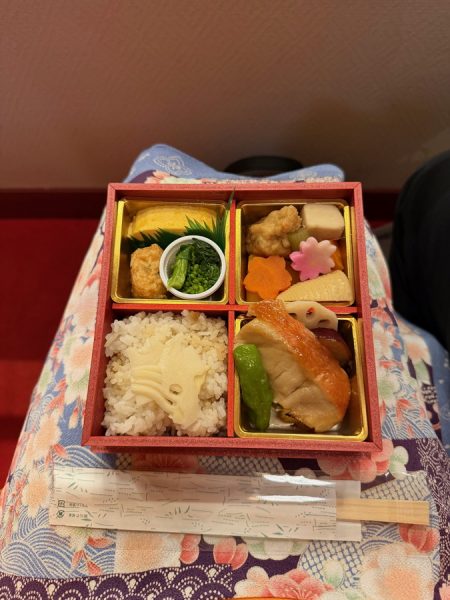
Eating bento at the kabuki theater is one nice bit of kabuki culture. Originally, kabuki was a very low-brow form of theater for the common folk, so rules were a lot more lax. Nowadays, everyone must sit properly and stay quiet for the performance, but long ago it was normal for people to cheer and laugh. A lot of that older culture still remains in Gifu’s ji-kabuki, or local kabuki.
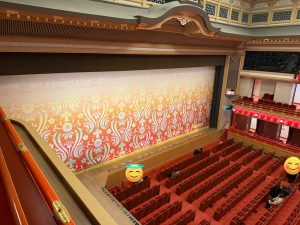
The performance of The Love Suicide at Sonezaki was beautiful! I’m so glad we could go.
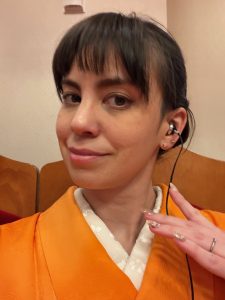
Since it was made in the Edo period, a lot of the Japanese is a bit antiquated. Thankfully, they had earphone guides available. These are little radio devices with a single earbud to pop in your ear. A narrator sometimes explains what the singing narration is saying in modern Japanese. They’re available in English for some performances, but this one was Japanese only.
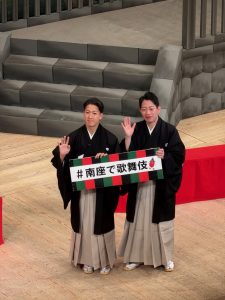
After the performance, the actors who played Ohatsu and Tokube came out for a talk. They were, of course, fantastic speakers and we all had a great time.


The performance ended after 8PM and we hopped back in our car and headed back home to Gifu.